


It’s Independence Day so … grills just wanna have fun.
No doubt that a fair amount of seared steer, flamed fish and fowl, and “Q’d” pork — not to say all manner of burgers, dogs, vegetables and even fruits or breads — will scent the air this weekend.
There’s not much that we don’t like cooking over flame, come the months of summer — and why is that?
It’s quick and cool, for one; when meat meets heat outdoors, that’s just sane on a sweltering day. It’s casual, as summer also goes. And no other heat source gives foods that flavor (and aroma!) that flame does.
Perhaps it also awakens in us a more primordial self, whether man or woman, charring the kill over the fire, tending the embers of the hearth.
Heat’s a blast.
But be careful: Before we get to all these scrumptious recipes for outdoor searing and sipping, there are some safety checks specifically geared to the grill.
If you don’t own tongs, forks or spatulas designed for grilling, at least stock your inner kitchen with utensils that are not only flameproof (ahem) but, more important, long-handled and very sturdy. Also, use your leather work or utility gloves or thick, terry-clothed kitchen towels to protect your hands (again, if you do not already own “grill-ready” gloves).
More in the length department: A 10- to 12-inch long butane lighter; for charcoal grills, a “chimney” starter with a heat-proof handle well-separated from the business section; foot-long wooden or bamboo skewers for cooking smaller pieces of meat or vegetables (be sure to soak them ahead for at least 30 minutes in warm water); and a long-nosed or -needled insta-read thermometer (preferably digital) to accurately and quickly check the insides of what’s atop the grill.
A final word on a cooking method that not near enough people use with their grill works: Indirect grilling, whereby the food is placed to the side of the source of heat rather than directly over it.
Assemble a small pile of coals on one half of the grill bed or pit (or ignite but one set of burners on a gas grill). The food to be cooked first may be seared on the hot side, if desired, or even finished on it.
But the main idea behind the indirect method is to cook the food much more slowly than usual on the “cooler” side of the grill. As the adage has it in the circles of Q-dom, “Low and slow is the way to go.”
The indirect method is indispensable for meats such as pork shoulder or beef brisket that require long, slow cooking (which is why they are both, to a lamentable degree, so often so poorly prepared when cooks use the conventional, direct-heat method).
But it also is terrific for foods that we normally cook in the direct method, such as steaks or chops. Placing them on the slow side allows the necessary cooking to be done, of course, but also imbues the food with even more of the deliciousness of aroma and smoky flavor that everyone wants.
Below are some tested Denver Post staff recipes for your summer grilling.

Foolproof Ribs with Barbecue Sauce
From “Barefoot Contessa Foolproof: Recipes You Can Trust,” by Ina Garten
As a fan of the BC, I was hoping this recipe would become my standard cooking method for ribs on the barby. It’s simple, and makes for a tender, juicy, fall-off-the-bone rack.
And if you like a tart, vinegary barbecue sauce — and plenty of it — to slather on the ribs, this recipe is for you.
But while others in the office raved about these, I’m going to risk the wrath of barbecue purists and stick to my old, easy-but-foolproof method (recipe follows). Sorry, Ina. — Barbara Ellis
Ingredients
- 5 pounds Danish baby back ribs (4 racks) or St. Louis ribs (2 racks)
- Kosher salt and freshly ground black pepper
- 1 recipe BC Barbecue Sauce (follows)
Directions
Preheat the oven to 350 degrees. Line a sheet pan with aluminum foil.
Place the ribs on the sheet pan meat side up and sprinkle them with 2 teaspoons salt and 1 teaspoon pepper. Pour the barbecue sauce generously on each rack and cover the ribs loosely with foil. Bake for 1 1/2 hours for baby backs and 1 3/4 hours for St. Louis ribs, until the meat is very tender when tested with a fork. As soon as the ribs are out of the oven, spread them generously with additional barbecue sauce. Grill right away or refrigerate to grill later.
Place the ribs on an grill rack prepared with grilling spray ribs-side-down and close the lid; grill for 5 minutes. Turn the ribs meat-side-down, put the lid back on and grill for another 4 to 5 minutes until nicely browned. Remove from heat and let rest for 10 minutes. Serve with extra barbecue sauce on the side.
BC Barbecue Sauce
From “Barefoot Contessa Foolproof: Recipes You Can Trust,” by Ina Garten
Makes 1 1/2 quarts.
Ingredients
- 1/2 cup vegetable oil
- 1 1/2 cups chopped yellow onion (1 large)
- 1 tablespoon minced garlic (3 cloves)
- 1 cup (10 ounces) tomato paste
- 1 cup cider vinegar
- 1/2 cup Worcestershire sauce
- 1 cup Dijon mustard
- 1/2 cup soy sauce
- 1 cup hoisin sauce
- 2 tablespoons chili powder
- 1 tablespoon ground cumin
- 1 1/2 teaspoons crushed red pepper flakes
Directions
Heat the oil in a large saucepan over low heat. Add the onions and cook for 10 to 15 minutes, until the onions are translucent but not browned. Add the garlic and cook for 1 more minute. Add the tomato paste, vinegar, honey, Worcestershire sauce, mustard, soy sauce, hoisin sauce, chili powder, cumin and red pepper flakes. Bring to a boil, then lower the heat and simmer uncovered for 30 minutes. Use the sauce immediately or pour into a covered container and refrigerate.
Easy (But Foolproof) Barbecue Ribs
Sprinkle a healthy amount of any good store-bought rub (I use Emeril’s Rib Rub) all over a rack or two of good-quality ribs trimmed of excess fat. Letting it sit in the rub overnight is best, but I’ve also done it with just an hour or two and they’ve still come out pretty good. (Alternately, sprinkle the rub on and freeze them, then thaw in the fridge before cooking.) Wrap in foil and bake in the oven at 300 degrees for 2 hours or so. Remove from foil and grill over direct heat for 4-5 minutes on each side to brown. Slather with your favorite barbecue sauce (mine is Sweet Baby Ray’s) and grill for another 4-5 minutes on each side to caramelize. — Barbara Ellis
Grilled Portobello Burgers
Recipe from Bill St John; serves 6
Ingredients
- 6 medium to large cremini or portobello mushrooms
- 6 egg-based (brioche) hamburger buns or rolls
- 1/4 to 1/2 cup good quality olive oil
- Several grinds of black pepper
- Kosher or sea salt
- Several pinches herbes de Provence, crushed in palm of hand
- Leaves of romaine lettuce
Directions
Choose mushroom caps larger than the diameter of the buns, to allow for anywhere from 25-50 percent shrinkage from the heat of the grill. De-stem the mushrooms (use them later for stocks or broths) and brush or quickly rinse away any noticeable growing medium from them. Slice the buns or rolls crosswise along their equators leaving a slight “hinge” just before slicing all the way through.
Add the remaining ingredients, except the lettuce leaves, to a small bowl and mix together well. Just before grilling, liberally brush the mushroom caps on both sides with the flavored oil.
Grill the caps on both sides until they have released much of their water and are beginning to darken well and turn “meaty,” taking care not to blacken or burn them. Set them aside. Briefly toast the insides of the breads atop the grill. Layer the caps onto the buns and top with the lettuce leaves. Serve with any number of possible condiments or sauces.
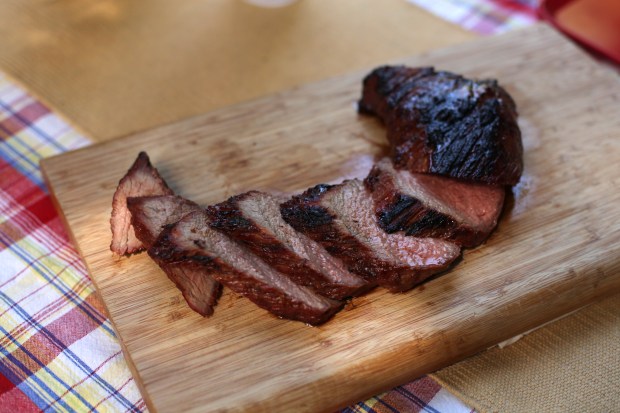
Marinated Beef Teriyaki
My sister in New Hampshire has been making this for more than 30 years; it’s a never-fail marinade for most cuts of beef. — Barbara Ellis
Ingredients
- Sirloin tip steak, or flank steak
- 1 cup soy sauce
- 1/3 cup cooking sherry (or drinking sherry)
- 1 teaspoon (or more) minced garlic (jarred OK)
- 1/2 teaspoon ground ginger
- 5 tablespoons sugar
Directions
Mix all together until the sugar dissolves. Pour over meat and let marinate for 3-4 hours (overnight OK for thicker cuts) before grilling. Use a grilling thermometer and cook to rare (140 degrees). Take off the heat, tent with foil and let rest 10 minutes before slicing.

Beer Can Chicken
I’m a big beer fan, so anytime I can cook with beer, I go for it. I first heard of the beer can chicken concept in high school, when one day my father came home with a book called “A Man, a Can, a Plan.” I can’t remember if a beer can chicken recipe was in this book, but certainly we were inspired by it and at some point made a delicious beer can chicken in the oven. This version, my fiance and I developed after finding the amazing and incredibly versatile The beer basically steams the inside of the chicken, and imparts some extra flavor, keeping the meat moist inside as the hot coals in the grill char the outside of the chicken. It’s a beautiful combination. I usually use the Upslope’s Brown Ale, because that’s what my dad picked out for us when we made this recipe together a few years back. — Patrick Traylor
- One whole chicken
- One 12-ounce can beer or soda (half to drink, half for the bird)
- Dry rub:
- 4 tablespoons salt
- 3 tablespoons brown sugar
- 2 tablespoons ground paprika
- 1 tablespoon ground cayenne
Mixed Cut-up Grilled Vegetables
Recipe from Bill St John; serves 6
Ingredients
- 1 small orange- or garnet-fleshed yam or sweet potato
- 1 medium Asian eggplant (or small “French”)
- 1 yellow summer squash
- 1 zucchini
- 1 red bell pepper
- 1 sweet onion (such as Vidalia), peeled and cut into eighths
- 1/4 cup good quality olive oil
- Several grinds of black pepper
- Kosher or sea salt
- Several pinches herbes de Provence, crushed in palm of hand
- Quarters of fresh lemon
Directions
You will need a grilling basket or pan for this recipe; it will hold the vegetable pieces on the grill and over the heat, keeping them from falling through the grating.
Peel the yam or sweet potato and cut it into 3/4-inch squares; blanch these in quickly simmering water for 15 minutes, drain and add to a large bowl. Cut the remaining vegetables into uniform-sized pieces, but no larger than 1-inch across or square, adding the pieces to the bowl. Add the remaining ingredients except the lemon and toss well.
Place the grilling basket or pan over the grill’s grates and add the contents of the bowl, stir quickly, and replace or lower the grill’s hood.
Flip or toss the vegetables every 5 minutes until they are charred, caramelized or cooked through to your liking. Transfer to a platter or plates and sprinkle with squeezes of lemon juice.

Grilled Mexican Street Corn
- 4 ears of corn
- 1/4 cup mayonnaise
- 3/4 cup sour cream
- 1/4 cup chopped cilantro
- 1/2 cup grated Parmesan
- 1 lime
- Red chili powder

Cole Slaw
- 5 cups shredded green and red cabbages, with peeled, shredded carrot, daikon and sweet-crisp red-skinned apple
- For the dressing:
- 1/2 cup mayonnaise
- 1/2 cup sour cream or creme fraiche
- 1 tablespoon granulated sugar or honey
- 3 tablespoons apple cider vinegar
- 1/2 teaspoon kosher salt
- Several grinds black pepper, or to taste
- 1/4 teaspoon celery seeds

Watermelon Agua Fresca
A friend made this summery drink in a clear pitcher with an infuser (for the mint) and brought it to a recent book club meeting. It was a hit: so refreshing (and beautiful). It’s also versatile: You can put a lemon-lime soda in it instead of sugar for sweetening or vodka to make it boozy. Be sure to blend well to avoid chunks of watermelon thunking into the glass as you pour, and thin with more water if it’s too thick. — Barbara Ellis
Ingredients
- 4 cups cubed and seeded watermelon
- 1/2 cup water
- 1/2 cup (or less) white sugar, to taste (I only used about 1/4 cup and it was sweet enough)
- 4 slices lime
- 24 fresh mint leaves
- ice
Directions
Puree the watermelon and water in a blender until smooth. Add sugar to taste. Cut the lime slices in half. Place a half lime slice into each of 8 glasses along with 3 mint leaves. Crush with a cocktail muddler, then fill each glass with ice. Pour in the watermelon agua fresca, and stir before serving. (Variation: Muddle the mint slightly and put it into the pitcher’s infuser, then pour the pureed watermelon into the pitcher. You can also put slices of lime into the pitcher, or line the sides of it with limes for a visual treat.)


