

_While working in restaurants and similar venues is a widely recognized aspect of the food industry, there are many more avenues and options for culinary professionals to take._
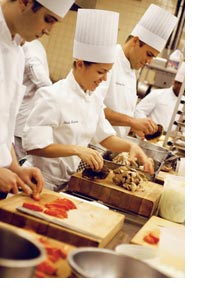 The culinary industry itself can be just as diverse as the professionals it’s comprised of. While television shows and magazines have helped popularize this field in recent years, many of these would-be chefs come into the business as a second career.
Austin Yancey decided to attend culinary school after he spent the majority of his previous college experience cooking for his peers– and making a profit while he was at it.
“I immediately thought I wanted to go into biology out of high school,”? he says. “Throughout that time, I didn’t like the normal college experience, so I spent most of my time cooking. Friends would call me up at night and ask me what’s for dinner, so I’d buy a bunch of groceries and charge $5 a head.”? Serving homemade meals to friends and family is a great way to test the water before making the plunge into the food industry full-time.
Kirk Bachmann, chef at the Culinary and Hospitality Industry of Chicago, part of the prestigious Le Cordon Bleu Schools, says the fast-pace working environment and atypical days make this field appealing.
“[Cooking] lends itself to creativity and excitement and passion,”? he explains. “The perception of a chef has changed. A chef is also a manager in addition to everyday tasks such as creating menus, hiring, training, and motivating employees and coordinating with managers and other team members to ensure a seamless guest experience.”?
h3. Beyond Restaurants
While working in restaurants and similar venues is a widely recognized aspect of the industry, Bachmann says there are many more avenues for culinary professionals to take. One such channel is preparing meals for the elderly in an assisted living environment. This allows chefs to work in a less hectic, but equally demanding environment, he says.
Though the surge in television shows starring current and would-be chefs is hitting an all-time high, professionals in the industry warn against entering into the business with the sole purpose of looking for stardom.
“The best chefs I know attended culinary school or did an apprenticeship regardless of pay,”? says Bachmann. “That doesn’t matter when the passion is there. Understand what you see on TV is not always accurate or realistic; everything in many ways is very, very orchestrated for [Food Network chefs like] Rachael Ray.”?
h3. Diner Comes First
A chef’s main goal is to create a pleasant dining atmosphere for the client, whether it be in a high-end restaurant, a catered event or in the privacy of the client’s home.
“Many students are attending culinary school today because of the rise of better restaurants in their town and cities,”? Bachmann explains in regard to the ever-changing neighborhoods in cities across the United States. “In the early 1990s, we saw an increase in small, independently owned, well-crafted restaurants. To find a small, white-tablecloth restaurant became less odd and many cities, such as Portland, Ore. and Chicago are continuously being re-affected by city living culture and one of the first types of businesses that comes into that type of area is the restaurant.”?
Because the restaurant environment is unlike any other work experience, experts suggest speaking with someone in the industry before attending culinary school. Doing so will give you a taste for what’s expected of you and the passion the job requires. You’ll get an inside look at the pros and cons of the industry. “You have to have a passion to do well in this business,”? adds Yancy of CHIC. “Know what you’re jumping into before getting into anything. Talking to local chefs or someone who has been to culinary school is a good idea. Look at all your options-– in this business, you have to watch out for yourself and you have to pick a school that will give you the skills to do that.”?